Dream Big
Ralph Lauren's larger-than-life symbolic oeuvre gets the "Catwalk" treatment, with a side of Carl Jung.

Dreams. Since time immemorial, great minds have engaged in countless reveries about reveries. Per William Shakespeare, “We are such stuff as dreams are made of.” Henry David Thoreau mused that “Dreams are the touchstones of our characters.” And, as the immortal philosopher Annie Lennox put it, “Sweet dreams are made of this. Who am I to disagree?” Fashion, too, loves its dreamers, and for almost sixty years, no one has dreamed quite as big as Ralph Lauren.
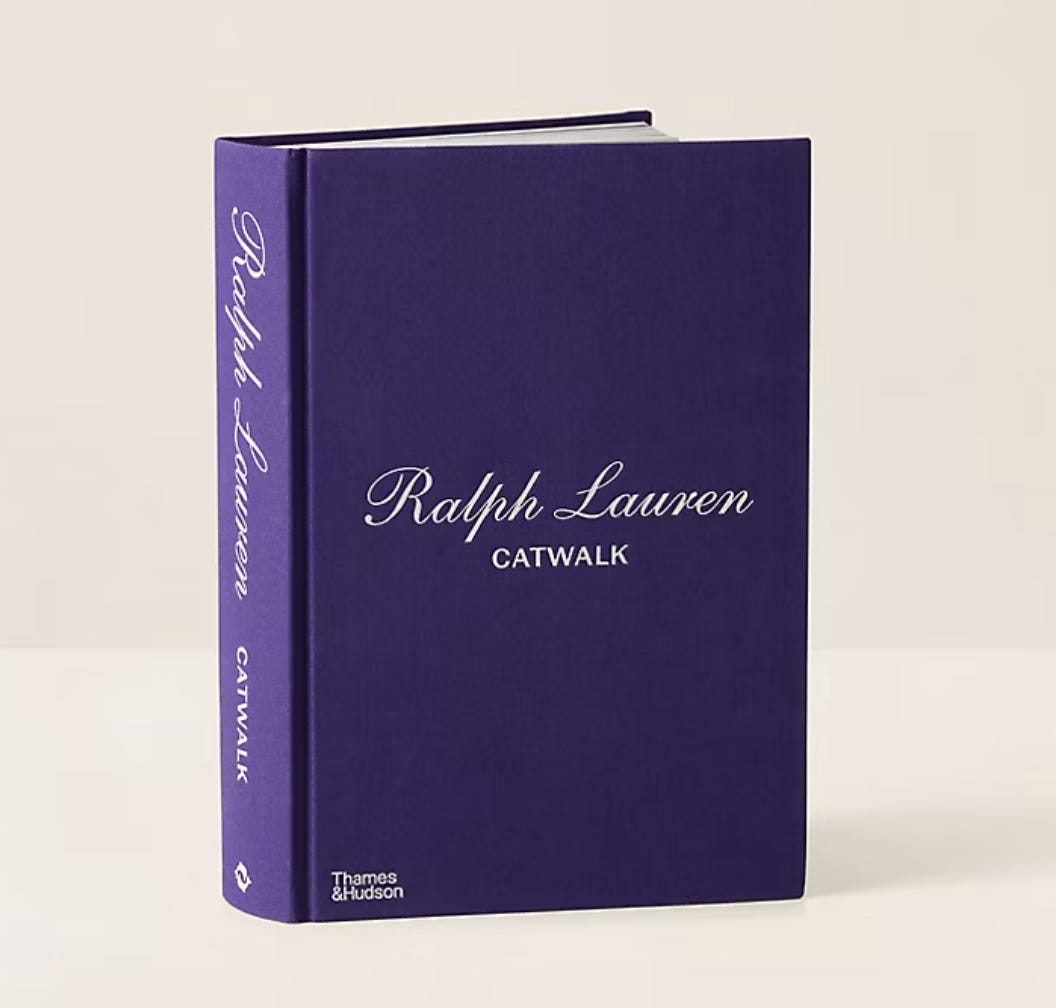
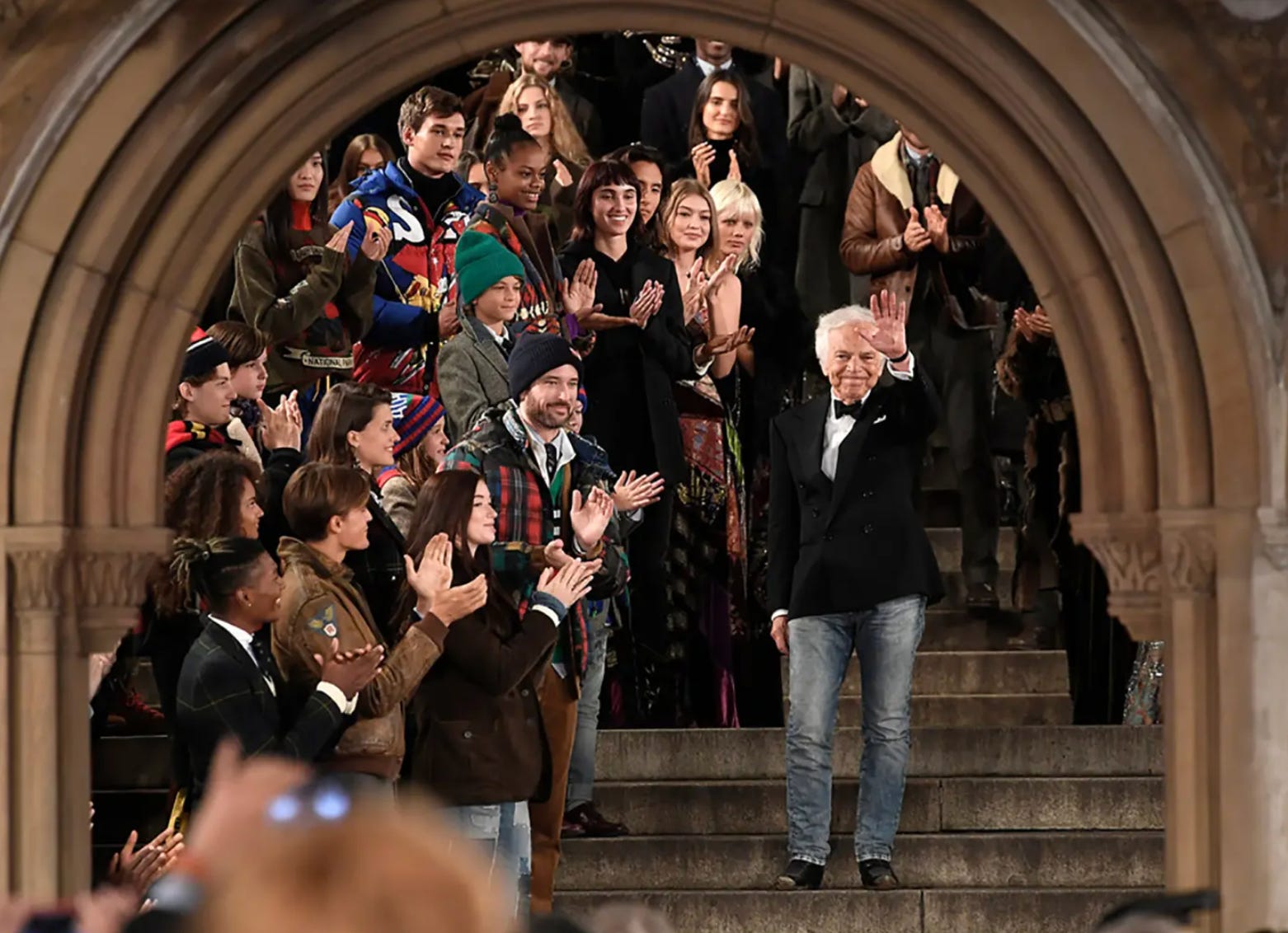
Lauren’s expansive oeuvre is newly examined in Ralph Lauren Catwalk, the latest edition in Thames & Hudson’s Catwalk series, which provides in-depth looks at the runway work of major-house designers. To mark the launch, on Tuesday, an event at London’s Victoria & Albert South Kensington will delve into Lauren’s runway career. Lydia Slater, editor in chief of Harper’s Bazaar UK, will moderate a panel featuring models Saffron Aldridge and Jacquetta Wheeler, Substack Consider Yourself Cultured creator Jalil Johnson, and fashion critic (and friend of Tossing Shirts) Bridget Foley, Ralph Lauren Catwalk’s author. Earlier this month, Foley and Johnson also took part in a New York panel, along with moderator Samira Nasr, EIC of Harper’s Bazaar US; photographer Tyler Mitchell, celebrity stylist Erin Walsh and needs-no-introduction icon Iman.
A universal take of the NYC panelists: great admiration for Lauren’s status as an aspirational designer. Not in the sense that he makes expensive items to lust over, but in that he makes beautiful items that reflect an idealized life well-lived. The book bolsters this notion with gusto, its exploration of 53 years of runway shows testifying to Lauren’s genius for bringing his imagined worlds into material reality. The writing is also quite good (although, in fairness, this is hardly an impartial source).
Lauren describes his process, saying, “I build a collection out of a dream.” A lovely thought, romantic and lyrical—with serious academic bona fides. In 1959, British journalist John Freeman came upon an illuminating BBC interview. In it, the psychologist Carl Jung discussed his life’s work, which studied how the human animal forms meaning. Bemused that this warm, affable man had not attained the celebrity status of his forebear, Sigmund Freud, Freeman started work on a book of essays explaining Jung’s work to the masses. Man and His Symbols was published in 1964, three years after Jung’s death. Jung had penned the book’s first chapter, “Approaching the Unconscious,” in which he focuses on the power of dreams to create symbols.
Like many psychologists before him, Jung found himself obsessed with the sleeping mind, but with a decidedly less sex-obsessed bent than his peers, noting, “a dream can contain some other message than a sexual allegory.” So, sorry Siggy, not every nocturnal battering ram is a penis. (That said, it’s possible that Freud’s penile plethora contributed to the fame gap betwixt him and Jung.) What fascinated Jung was how images and ideas born in the land of Nod offer powerful symbols with daytime resonance. “When we want to investigate man’s faculty to produce symbols,” he writes, “dreams prove to be the most basic and most accessible material for this purpose.” Beyond that, he explains that dreams have generative import: “Many artists, philosophers, and even scientists owe some of their best ideas to inspirations that appear suddenly from the unconscious.”
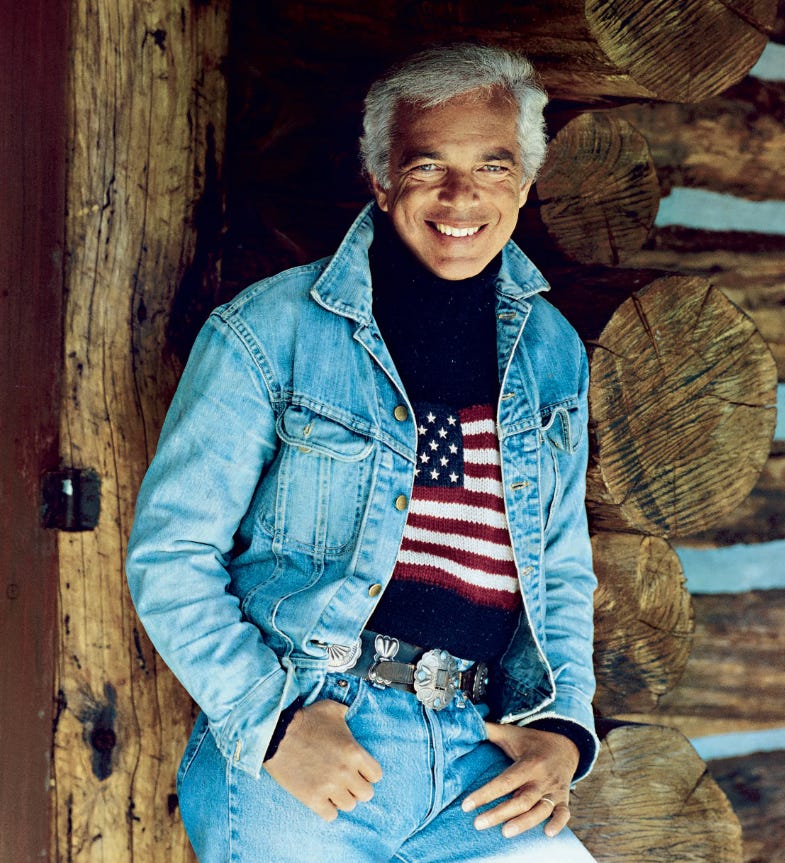
This process of unconscious discovery feels very Lauren-esque. Not to suggest that there is anything thoughtless about Ralph Lauren’s work; anyone who’s thrown on one of his cashmere cable knits or feasted on a corned beef-on-rye at the Polo Bar knows better. But as impeccably curated as the Ralph Lauren universe is, nothing about it feels overly manufactured. Even Lauren’s trajectory resonates as organic. Rather than a calculating impresario charting each step of his business empire, Lauren was a guy making the things that he needed or wanted. He started designing men’s wear when he couldn’t find clothes that fit his taste. Ditto for women’s wear and his wife Ricky’s sartorial needs. When the children came along, so did a kids’ line. When good fortune and hard work led to multiple residences to decorate, he launched a home line. If he and his family found these new products cool, Lauren reasoned, other people would, too. As such, Lauren’s business expansions were intuitive rather than clinically assessed.
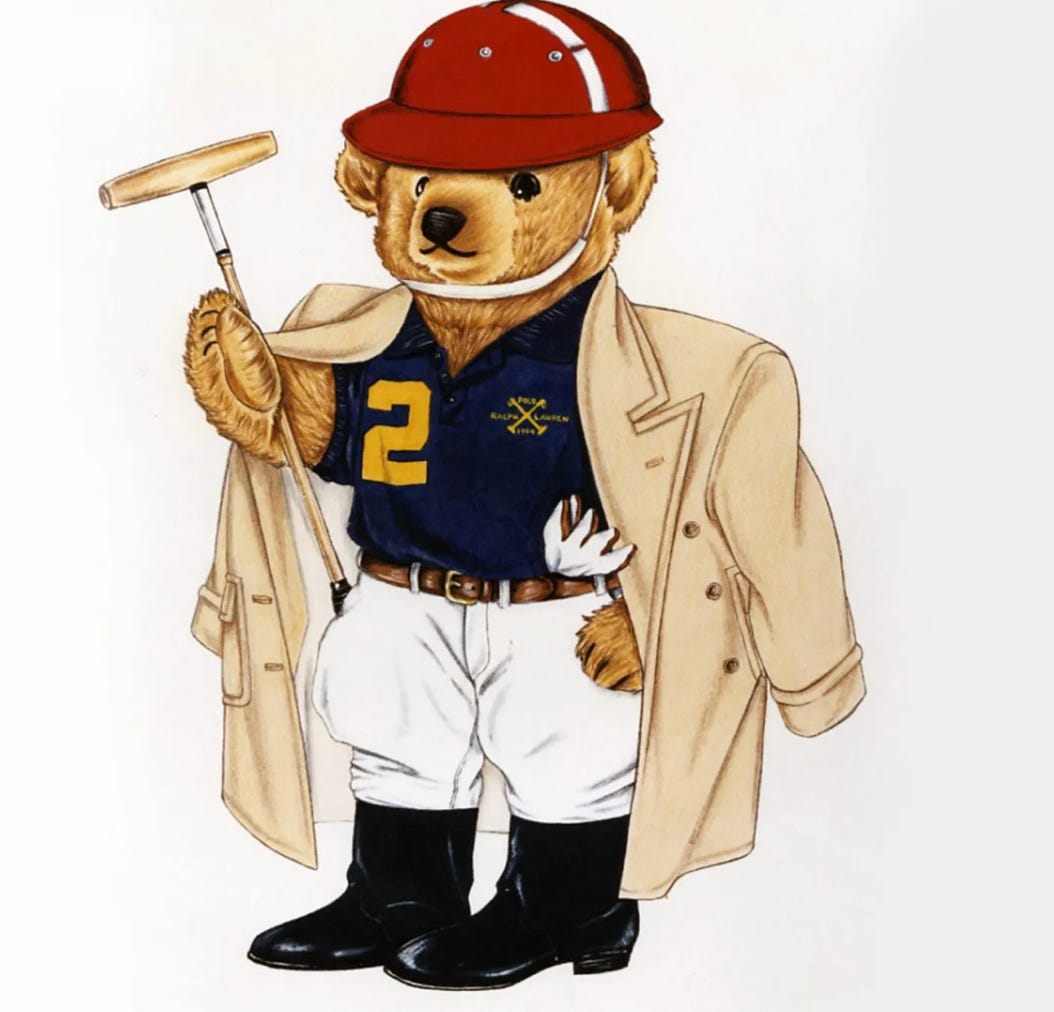
If aspirations reveal themselves in dreams, so, too, do symbols, which Jung describes as “Images…much more picturesque and vivid than the concepts and experiences that are their waking counterparts.” These images, when brought into the morning light, take on transformational power. It’s hard to imagine anyone who might appreciate the significance of a dreamer’s symbols more acutely than Ralph Lauren. Take, for example, one of the most famous fashion symbols ever, one that, back in 1972, a young man decided to embroider onto a shirt because it referenced the glamorous sportiness to which he aspired. For a million bucks, the average American Jane or John Doe could not tell you one fact about lowercase-p polo beyond “horses.” But show them an embroidered, mallet-swinging fellow on a horse, and they will have distinct knowledge of what that little equestrian represents (American fashion, preppy style, their high school uniform). The Polo Pony is a logo, yes. It is also a visual stand-in for a lifestyle and, for millions of people the world over, an intimate symbol, inextricably linked to memories. Intensely personal, these vary from person to person, and can be conjured at the drop of a hat (or a polo ball, if that’s even what they’re called).
Yet just because we all dream doesn’t mean that just anybody could pop, say, a cricket player onto a Henley and achieve world-building success. Jung reminds us that, “No dream symbol can be separated from the individual who dreams it.” The world of Ralph Lauren, with its various markers—exquisite tailoring, Americana, rugged Western workwear, et cetera—is a representation of the man himself, an eternal optimist who believes that dreams can come true, if one employs real-world pragmatism, fortitude, and hard work in their pursuit. In turn, Lauren has become a symbol for the American Dream—not the hoary, eyeroll-inducing cliché, but the one so many of us still dearly want to believe is real. This, along with the really, really great clothes on display in Catwalk, is why Ralph Lauren has remained relevant for sixty years, and why social media evidence abounds indicating that the brand is currently beloved by Gen-Z.
Jung writes about the compensatory nature of dreams. He feared that scientific reasoning had “dehumanized” the world, severing humanity’s emotional, instinctive connection with forces beyond itself— a dreadful state of affairs that fosters a subconscious yearning for more connected times. “This enormous loss,” he offers, “is compensated for by the symbols of our dreams,” which hold “numinous power over the mind.” (“Numinous” is Swiss head-shrinker speak for “mystical.”)
Hmmm, dehumanized, isolated and pining for something better. Sound familiar? In that light, a dream world, particularly one rendered in tangible cloth, leather and, sometimes, filet mignon, holds undeniable sway. Through Ralph Lauren Catwalk’s several hundred pages, one can delve into that alluring dream world. And then, one can go out and purchase a dress, or a pair of socks or a latte, or, yes, a Polo shirt, that brings the dream to life.